

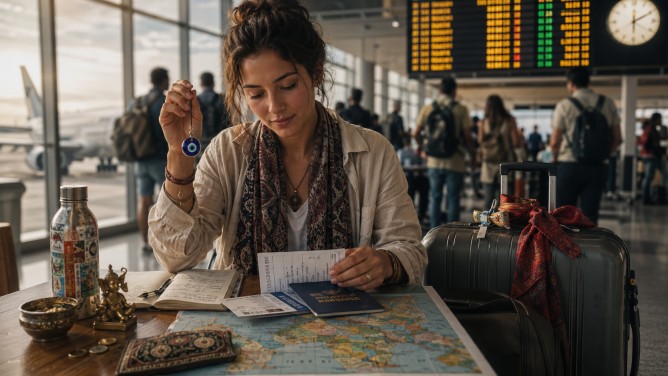
Travelers across the globe often embrace unique beliefs and rituals to ensure a safe and prosperous journey. These travel superstitions, deeply rooted in cultural traditions, bring a sense of comfort and protection to those on the move. One such practice in the Balkans involves carrying a clove of garlic. This aromatic bulb is traditionally thought to ward off negative energy and the evil eye, with some travelers placing it in their luggage to keep bad luck at bay.
Another popular ritual involves touching the outside of an aircraft before boarding. This gesture, seen as a harbinger of good fortune, is particularly comforting for nervous flyers. Similarly, stepping onto a plane with the right foot is considered a positive omen, signifying the start of a journey on a favorable note. Such practices are more than mere gestures; they are comforting rituals that ease the minds of those embarking on their travels.
Cultural superstitions also extend to family dynamics, as seen in the Middle East and the Balkans, where pouring water behind a departing traveler is believed to ensure a smooth and safe trip. The flowing water symbolizes an untroubled journey, with hopes of a safe return. Conversely, certain numbers are avoided in many cultures due to their unlucky connotations. While 13 is shunned in the West, the number 4 is often avoided in China for its phonetic resemblance to the word “death,” and 17 holds similar negative associations in Italy, affecting hotel room selections and building floors.
In Slavic tradition, a moment of quiet reflection is observed by sitting on packed luggage before departure. This pause allows travelers to mentally prepare for their journey ahead. Additionally, in various cultures, sweeping the floor immediately after someone leaves is discouraged. This act is seen as symbolically removing the traveler’s good fortune or hindering their safe return.
While these customs may lack scientific validation, they remain an intriguing component of travel culture. For many, these rituals are cherished family traditions that not only preserve cultural identity but also enhance the thrill of embarking on a new adventure. Whether these superstitions truly influence outcomes or simply provide peace of mind, they continue to be a beloved aspect of the travel experience.