

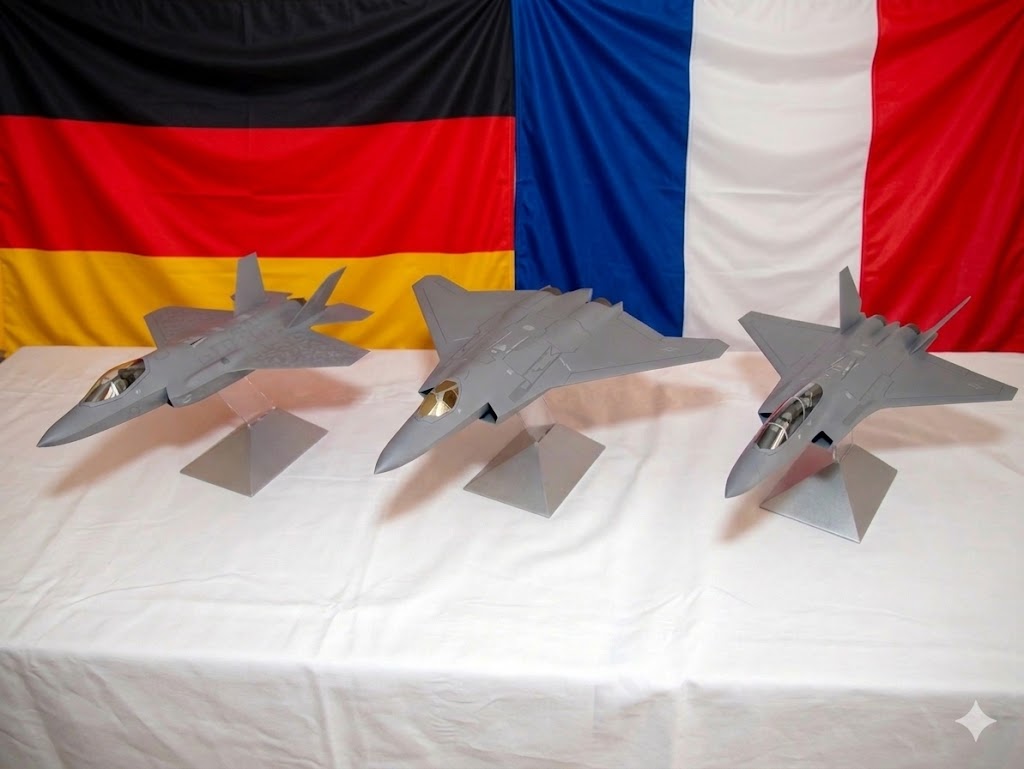
The joint fighter jet initiative between France and Germany, known as the Future Combat Air System (FCAS), has been officially terminated after persistent disagreements among the involved companies. This decision marks a significant hurdle in Europe’s pursuit of enhanced defense cooperation. Originally launched in 2017 by then French President Emmanuel Macron and former German Chancellor Angela Merkel, the project aimed to create a next-generation fighter jet to replace France’s Rafale jets and the Eurofighter fleets used by Germany and Spain by around 2040.
The collaboration faced continuous setbacks due to disputes between France’s Dassault Aviation and Airbus, which represents interests from Germany and Spain. Key points of contention included leadership roles, intellectual property rights, and the overall management structure of the program. Dassault insisted on a primary role to protect its technological advancements, while Airbus pushed for a more equal partnership with comprehensive technology sharing among the nations involved.
Additionally, differences between France and Germany emerged over the operational requirements of the aircraft. France advocated for a singular European fighter capable of carrying nuclear weapons and operating from aircraft carriers, whereas Germany maintained that its military needs were distinct. Despite numerous political efforts to salvage the project, the disagreements proved insurmountable, and recent mediation attempts also failed to bridge the divide between the companies.
Although the joint fighter jet component has been discontinued, some elements of the broader FCAS initiative may still progress. European officials have indicated that work on related technologies, such as advanced drones and a secure combat data network aimed at connecting aircraft and military systems, could continue as independent projects. The dissolution of the FCAS marks a crucial challenge for European defense integration and underscores the complexities of managing large-scale military projects across multiple countries and industries.