

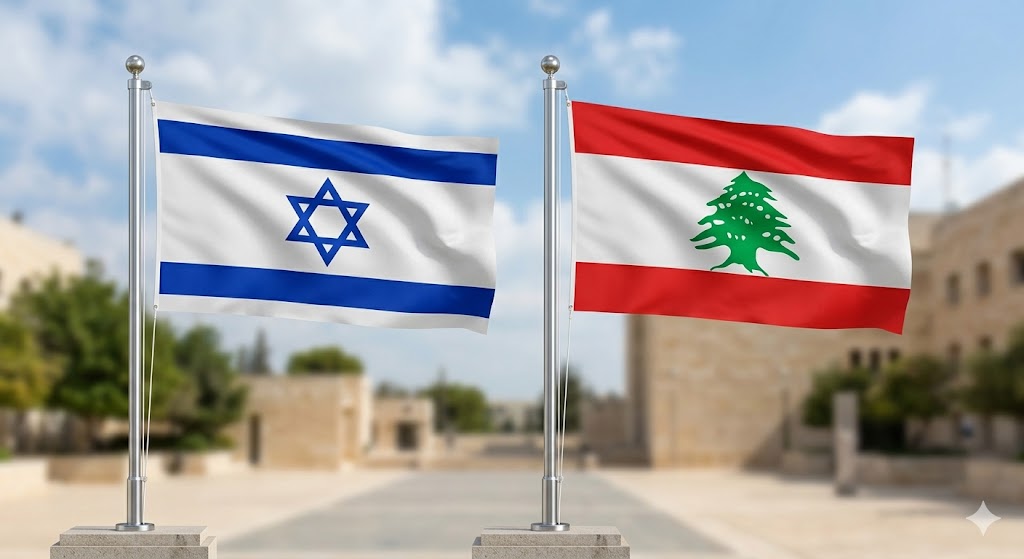
Israel and Lebanon have committed to renewing their ceasefire and continuing negotiations toward a comprehensive peace agreement, as announced in a joint statement with the United States. This renewed truce hinges on Hezbollah, the Iran-backed armed group, halting all attacks. Hezbollah is not part of the Lebanese government nor involved in the ongoing negotiations. The agreement aims to establish pilot security zones where the Lebanese Armed Forces will have exclusive control, with no involvement from non-state armed groups, to enhance security and lay the groundwork for a more extensive peace arrangement.
The announcement came after another round of high-level talks between representatives from Israel and Lebanon. Both parties reaffirmed their commitment to maintaining peaceful intentions and agreed to continue direct discussions to resolve outstanding issues. A key focus of the talks is developing a security framework designed to safeguard the sovereignty and territorial integrity of both nations while preventing the re-emergence of unauthorized armed groups in sensitive areas.
Despite the diplomatic advancement, tensions flared along the border. The Israeli military reported intercepting projectiles and a hostile aircraft launched from Lebanon. In contrast, Hezbollah claimed responsibility for targeting Israeli forces, citing alleged ceasefire violations as their motive. Meanwhile, Lebanese officials reported casualties resulting from Israeli strikes in southern Lebanon, highlighting the fragility of the ceasefire.
As Israel and Lebanon navigate these challenges, they are expected to resume negotiations later this month, with hopes of reaching a more durable and wide-ranging peace agreement. The unfolding situation underscores the complexities involved in achieving lasting peace in the region, with both sides working to overcome longstanding issues and build a framework for stability.