

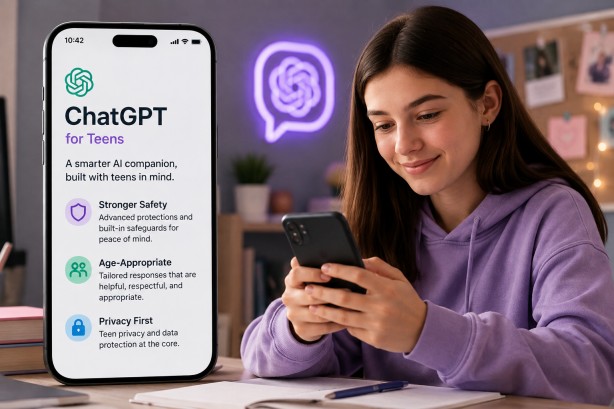
OpenAI has unveiled a specialized version of its AI chatbot, ChatGPT, tailored for teenagers aged 13 to 17. This new iteration incorporates enhanced safety measures and age-appropriate protections to foster a secure environment for young users engaging with AI for schoolwork, general inquiries, and companionship.
The teen-oriented version of ChatGPT is designed to limit interactions on sensitive topics, including self-harm, suicide, and sexual or romantic discussions. These restrictions aim to safeguard younger users while promoting healthier AI utilization. Additionally, the platform offers features that allow parents to set quiet hours, during which their teens cannot access the chatbot, and in certain high-risk situations, parents may receive safety alerts.
To address sensitive issues such as eating disorders, OpenAI has introduced extra safeguards and limits on potentially harmful content, directing users to offline support when needed. The company is also working to prevent teenagers from forming unhealthy emotional connections with the chatbot by ensuring the AI does not convey personal feelings, consciousness, or emotions toward users.
OpenAI utilizes age-assurance technology to estimate and identify users under the age of 18, based on their interaction patterns with the service. Those identified as minors can be automatically transitioned into the teen version, which includes these additional protections.
In the educational realm, ChatGPT for Teens is crafted to encourage young learners to engage with and solve problems, rather than simply delivering answers or completing tasks for them. This approach is aimed at positioning AI as a supportive tool in the learning process, rather than a substitute for genuine educational engagement.