

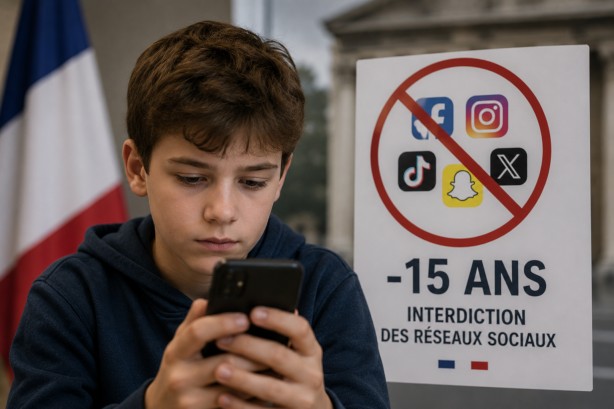
In a groundbreaking move for the European Union, France has become the first nation within the bloc to implement a countrywide ban on social media access for children under 15. This development follows the French parliament’s approval of new legislation aimed at bolstering online safety measures. Spearheaded by President Emmanuel Macron, the law mandates that social media platforms restrict account creation by users under 15 starting September 1, with existing accounts for this age group to be deactivated by January 2027 through compulsory age verification.
The burden of enforcing this legislation will fall on social media companies, which are tasked with implementing robust age-verification systems while ensuring the protection of users’ personal data. This initiative is part of a larger strategy to shield children from the potential negative impacts of excessive social media use on mental health. Moreover, a related measure will see mobile phone usage prohibited in high schools from the onset of the new academic year, although access to educational websites and online encyclopedias will remain permissible.
Proponents of the legislation highlight its necessity in safeguarding young users from the adverse effects associated with prolonged social media exposure. However, the law has not been without its detractors, who raise concerns regarding privacy issues, the feasibility of enforcement, and the potential for children to circumvent age-verification processes.
In parallel with France’s legislative efforts, the European Commission is exploring broader EU-wide initiatives focused on enhancing online safety for children. The commission has initiated trials of a digital age-verification application across multiple member states, indicating a potential shift towards more stringent regulation of social media access for minors throughout Europe.
This legislative action by France reflects an increasing global trend towards tighter control over children’s use of social media platforms. As countries worldwide grapple with the implications of digital interaction on youth, France’s proactive stance may serve as a model for future regulatory measures aimed at protecting young internet users.